

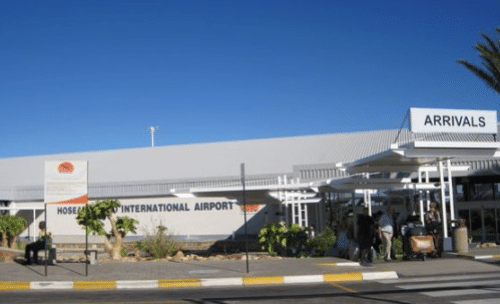
The Namibia Airports Company (NAC) has announced the successful re-certification of Hosea Kutako International Airport (HKIA) and Walvis Bay International Airport (WBIA), a key milestone for aviation safety and national development. The aerodrome certificates were issued by the Namibia Civil Aviation Authority (NCAA) on 5 December 2025 and are valid until 6 December 2027.
Both airports achieved an 83% Effective Implementation (EI) score, confirming compliance with the Namibia Civil Aviation Regulations (NAMCARs Parts 139 and 140) and alignment with the Standards and Recommended Practices of the International Civil Aviation Organisation (ICAO). As Namibia’s main international gateways, the re-certification reinforces the country’s commitment to safe, efficient, and globally compliant airport operations.
Speaking on the achievement, NAC Chief Executive Officer Mr Bisey Uirab described the re-certification as a significant step forward for the aviation sector. He said maintaining aerodrome certification is an ongoing process that requires continuous improvement in safety and operational standards. According to Uirab, the milestone supports Namibia’s broader vision of driving economic growth through reliable and safe air transport infrastructure.
Aerodrome re-certification is a rigorous process that involves sustained investment in infrastructure, systems, and people. It includes continuous maintenance and upgrades, as well as the training and upskilling of operational and maintenance staff. A strong organisational safety culture is also a critical requirement.
Under NAMCAR Part 139, the certification process consists of five phases. Phase 1 includes flight safety and environmental impact assessments to confirm compliance with safety performance requirements and the Environmental Management Act of 2007. These assessments ensure that navigational aids, flight procedures, and environmental controls meet regulatory standards.
In Phase 2, the aerodrome must submit a detailed Aerodrome Manual outlining facilities, systems, and operating procedures. Once approved by the NCAA, an organisational audit is conducted to assess whether NAC has the appropriate structure, competencies, and resources to operate the airports safely and in compliance with national and international regulations.
Phase 3 involves a comprehensive on-site inspection by the NCAA across 17 key audit areas. These include the Safety Management System, emergency planning, rescue and fire-fighting services, runway and apron conditions, visual aids, obstacle control, environmental management, electrical systems, maintenance programmes, and the integrity of published aerodrome data. The inspections also include interviews with operational staff to verify competency and readiness.
Following the inspections, the NCAA consolidates the findings to calculate the EI score, which determines whether the aerodrome qualifies for certification under Phase 4. The final phase involves the official publication of the aerodrome certificate in the Aeronautical Information Publication (AIP).
The re-certification of HKIA and WBIA provides renewed assurance to airlines and passengers that Namibia’s international airports continue to meet high safety and operational standards. It strengthens airline confidence, supports route retention and expansion, and enhances Namibia’s standing as a competitive aviation destination. NAC said the achievement reflects strong collaboration with the NCAA and other stakeholders and reaffirmed its commitment to continuous improvement and aviation excellence.
