

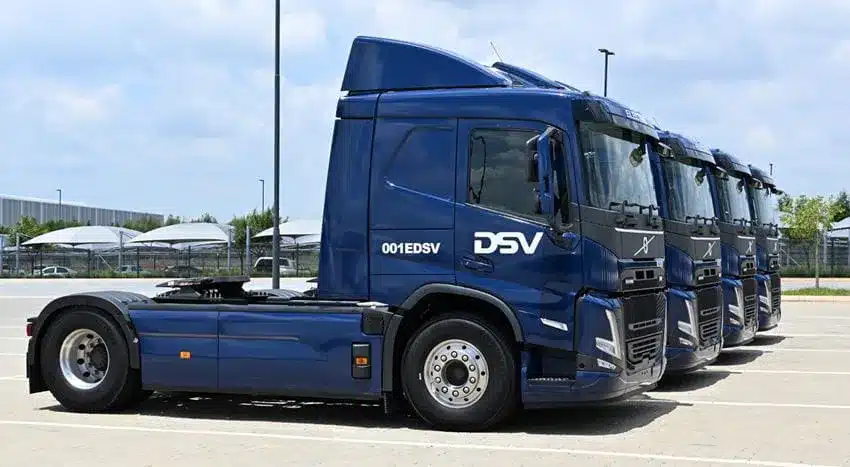
DSV has made significant strides in its sustainability efforts by adding six new Volvo FM 4 x 2 electric trucks to its fleet in South Africa. This announcement follows the successful launch of the company’s first 8-ton electric truck back in November, underscoring DSV’s continued dedication to reducing carbon emissions and providing more sustainable transport options.
These six new electric trucks will enhance DSV’s road operations in South Africa, building on a successful electric journey that started two years ago in partnership with a leading retailer in the region.
Ralton Moses, Vice President for DSV Road in Sub-Saharan Africa, stated: “With around 4,000 employees and nearly 2,000 vehicles in our road operations across South Africa, DSV plays a crucial role in maintaining efficient supply chains for diverse industries including food, healthcare, education, technology, banking, automotive, and retail. The introduction of these electric trucks is a pivotal move in our mission to minimize our environmental footprint.”
During operational trials, the new electric trucks showcased impressive energy consumption rates of 0.8 to 2.1 kWh, along with a maximum range of 322 km on a single charge. Their reliability and operational efficiency make them a strong match for DSV’s business model and sustainability goals.
“As we advance towards decarbonizing logistics, we reaffirm our commitment to sustainable practices and our duty to future generations,” Moses emphasized. “From installing solar panels and Battery Energy Storage Systems (BESS) at our key facilities to expanding electric mobility, we’re thrilled about the opportunities these investments present—not just for our company, but for our customers, the communities where we operate, and the environment as a whole. We take pride in leading the charge and hope to inspire other companies to follow suit.”
This major milestone aligns with DSV’s global commitment to the Science Based Targets initiative, which advocates for robust climate action within the private sector. DSV has set ambitious targets to reduce direct emissions (Scope 1 and 2) by 50% and indirect emissions (Scope 3) by 30% by 2030, relative to its 2019 baseline. The company is also dedicated to achieving net-zero emissions by 2050, in accordance with the Paris Agreement.
