

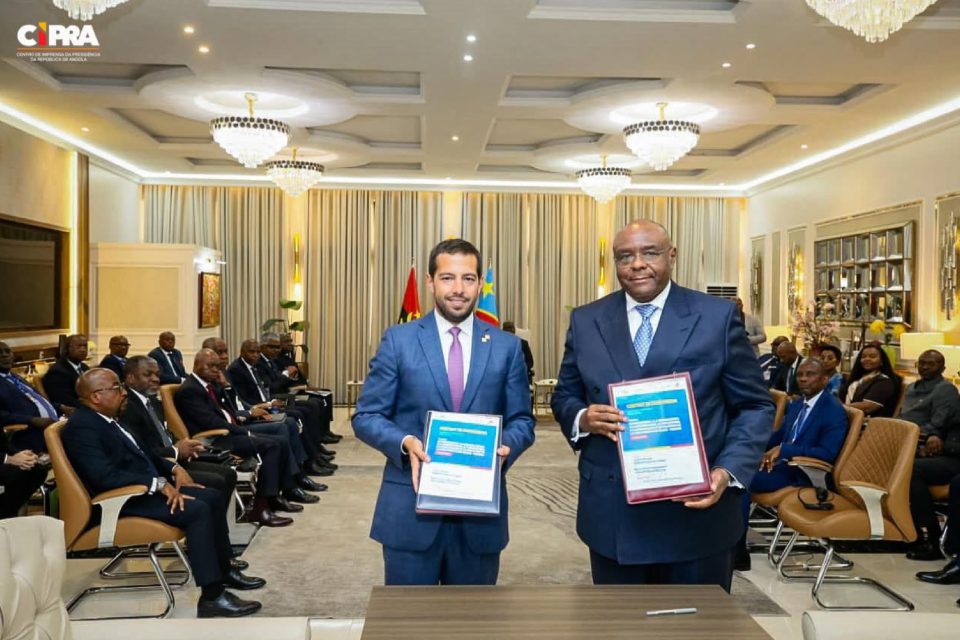


The Democratic Republic of Congo (DRC) has signed a landmark 30-year concession agreement with Portuguese engineering company Mota-Engil to operate, upgrade and maintain a 1,037km section of the Lobito Corridor between Dilolo, on the Angolan border, and Sakania, near the Zambian border. The agreement, signed on August 26 in a ceremony attended by DRC President Félix Tshisekedi and Angolan President João Lourenço, represents a major step towards strengthening regional transport links and improving the movement of minerals from Central Africa to international markets through Angola’s Atlantic port of Lobito.
Under the concession, Mota-Engil is expected to invest approximately US$1.8 billion in the rehabilitation and development of the railway infrastructure. The investment is intended to improve connectivity, increase freight capacity and strengthen the corridor as a strategic route for mineral exports from some of the DRC’s most important mining regions, including Lualaba and Haut-Katanga. Once upgraded, the railway is expected to handle up to 13.7 million tonnes of freight annually, including copper, cobalt and other minerals that are in high demand globally.
The agreement also has broader regional significance because the Lobito Corridor connects the mineral-rich areas of the DRC and Zambia with the Atlantic Ocean. Better railway infrastructure could provide mining companies and other businesses with a more efficient alternative for transporting goods, potentially reducing travel times and logistics costs. The improved connection could also encourage greater regional trade and investment by creating a more reliable transport network linking landlocked mining areas with international markets.

Mota-Engil already has significant involvement in the wider Lobito Corridor through its 49.5% stake in Lobito Atlantic Railway (LAR). The company operates under a separate 30-year concession for the 1,300km Angolan section of the corridor, known as the Benguela Railway, which runs from the DRC border at Dilolo-Luau to the port of Lobito. The Angolan concession began in 2024, and LAR transported more than 200,000 tonnes of freight during 2025.
The development of the corridor is also receiving international financial support. In July, a US$773 million financing agreement involving the US International Development Finance Corporation and the Development Bank of Southern Africa was completed to support upgrades to the Benguela Railway. The funding will contribute to the rehabilitation of bridges and stations, improvements to signalling and telecommunications, extensions of passing loops and the construction of maintenance facilities and freight terminals. The project will also support the restoration of the mineral terminal at Lobito port.

Meanwhile, Angola is advancing plans to expand the corridor through the construction of a new 260km railway branch from Luena to Saurimo. The project is supported by more than €1 billion in financing arranged by HSBC, including export credit-backed funding from the UK, Poland and the Netherlands. Construction began in February under a design-and-build contract led by Brazilian construction company Odebrecht Engenharia e Construção and its Portuguese subsidiary Bento Pedroso Construções.
The latest DRC concession demonstrates the growing importance of the Lobito Corridor as a regional transport and logistics route. By improving railway infrastructure across Angola and the DRC while developing connections toward Zambia and other mining areas, the project could strengthen Central Africa’s access to global markets and play an increasingly important role in regional economic integration and mineral supply chains.

