

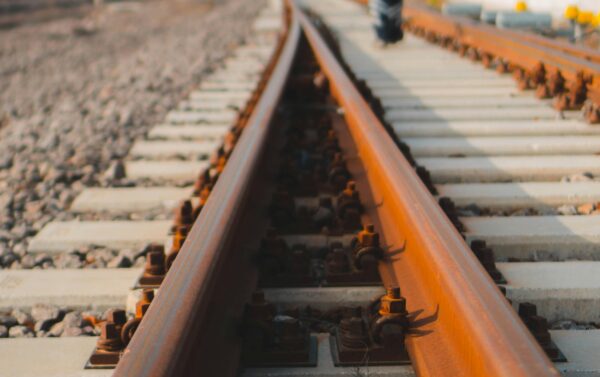
It will take seven years for Zambia Railways Limited (ZRL) to construct a new railway line, IDC Chief Executive Cornwell Muleya has stated while submitting a report to the Parliamentary Public Accounts Committee (PAC) in which he outlined the long-term strategy by the Industrial Development Corporation (IDC), the state-owned institution that regulates the operations of the firm, to upgrade the railway system in the country.
Following Muleya, the IDC is contemplating rehabilitation of the existing rail line prior to laying the foundation for a new one. The first phase of the project will be the upgrading of the existing system, which currently takes trains at a speed range of 15 to 20 kilometres per hour. The objective is to bring the railway line back to operating condition and enable the free flow of goods and people without hindrance.
This will be succeeded by the construction of a new rail line to international standards. The new system upon completion will be capable of transporting freight trains at a speed of up to 100 kilometres per hour and passenger trains at a speed of up to 120 kilometres per hour. Muleya further stated that rehabilitation and building new lines cannot be performed simultaneously on the same line, therefore necessitating the commissioning of an alternative line parallel to the existing one.
“The railway system is so worn out that patchwork or repair is no longer sustainable,” said Muleya. “It needs to be revamped entirely to provide Zambia Railways with a level of efficiency lost in the past.”
The IDC has estimated the cost of the rehab project at approximately US$1.75 billion. The process will begin with the corporation investing K100 million in the national budget to pay for the feasibility studies. These will guide the development of a restructuring and investment plan to restore Zambia Railways in stages.
Muleya explained that recapitalisation of Zambia Railways is a major process of national development as the company accounts for a high percentage of freight transportation in the country and region. Besides the renewal of the tracks, Zambia Railways requires significant investment in support functions such as purchasing locomotives, servicing rolling stock, and upgrading its industrial complex.
Currently, the company has only six locomotives—two owned and four leased—well short of the 20 to 32 required for optimal performance. Of the estimated 2,500 wagons required for unimpeded haulage of freight, Zambia Railways currently has only some 875 in use. The company expects its fortunes to turn around with strategic partnerships with local and overseas investors.
Zambia Railways has scheduled to begin the physical renovation of its infrastructure in 2026. The first project under this initiative will be the rehabilitation of the railway line from Ndola, in the Copperbelt Province, and Kapiri Mposhi, the Zambian terminus of the Tanzania-Zambia Railway Authority (TAZARA).
The second stage will involve the rebuilding of the main line from Livingstone, on the border with Zimbabwe, to Chililabombwe on the Copperbelt in the north of the country, close to the border with the Democratic Republic of the Congo.
With a vision plan and new determination from the IDC, Zambia Railways is positioning itself for a dramatic transformation which can return the nationto one of the key transport hubs of Southern Africa.
