

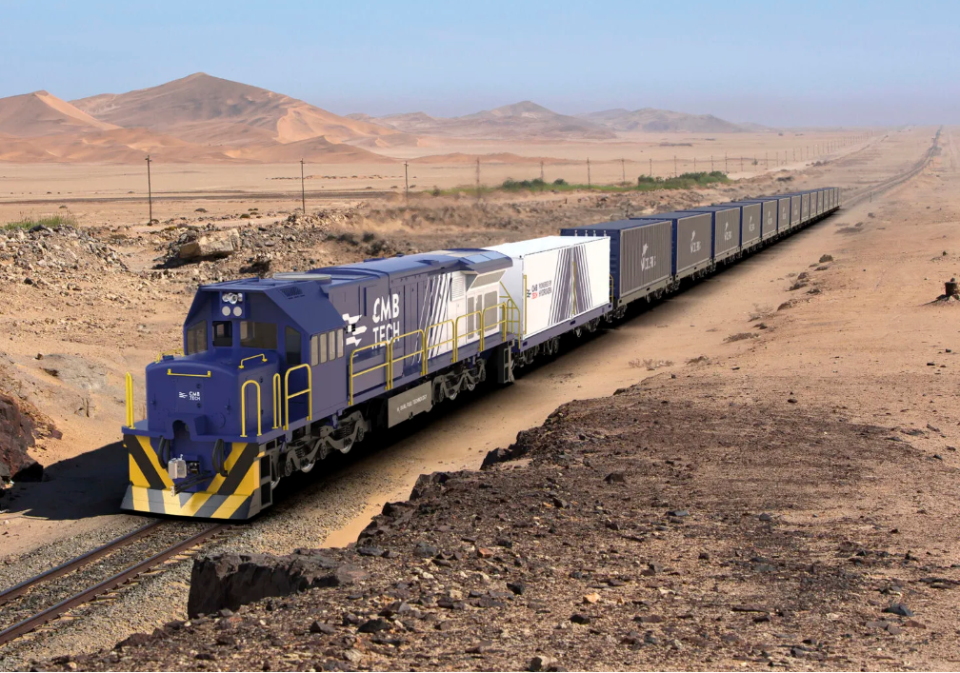


Namibia is taking a major step toward cleaner and more sustainable transport with the development of a green hydrogen-powered locomotive. The project, led by CMB.TECH Namibia, demonstrates the country’s growing commitment to innovative technologies and low-carbon logistics. The locomotive is currently being assembled at the facilities of Traxtion, a South African rail engineering and refurbishment specialist. Once completed, it will mark an important milestone for Namibia’s rail sector as it introduces hydrogen technology into heavy-duty freight transport. The initiative also provides an opportunity to repower some of Namibia’s existing locomotives, many of which are currently idle, using a cost-effective and future-proof alternative energy system.
The project is the result of a strategic partnership between three companies with strong roots in Namibia: TransNamib Holdings Limited, Africa Global Logistics (AGL), and CMB.TECH Namibia. As Namibia’s national rail operator, TransNamib manages and operates the country’s rail network and freight services. The company plays a central role in the nation’s transport infrastructure and is actively exploring ways to modernise its operations. One of the key strategies under consideration is the repowering of its existing locomotive fleet using advanced technologies such as dual-fuel hydrogen systems, which can significantly reduce emissions while maintaining reliable performance.
Africa Global Logistics, an established logistics operator in Namibia, also plays a crucial role in the project. The company is involved in freight, transport, and logistics operations across the country and works to strengthen major regional transport corridors. AGL manages operations at the Walvis Bay Multipurpose Bulk Terminal and operates one of Africa’s largest integrated logistics networks. With a presence in more than 50 countries, the company connects ports, transport corridors, and multimodal supply chains, helping to support trade and economic growth across the continent.

Through this partnership, Namibia is set to operate its first heavy-duty freight service powered by locally produced green hydrogen. The trial phase will include 50 round trips between the Port of Walvis Bay and the Container Depot near Windhoek. Depending on the results, the project could be expanded to support regular operations in the future. The hydrogen used in the locomotive will be produced off-grid at CMB.TECH Namibia’s hydrogen plant in Walvis Bay, demonstrating how renewable hydrogen can be integrated directly into an existing logistics corridor.
The locomotive is fitted with a BeHydro dual-fuel hydrogen combustion engine, developed by BeHydro, a joint venture between CMB.TECH and Anglo Belgian Corporation. This advanced engine technology is designed for use in marine, railway, and power generation applications and can operate either as a dual-fuel system or on 100 percent hydrogen. The locomotive in this project is equipped with a 2,250-horsepower dual-fuel engine that can run on both traditional diesel and green hydrogen. Hydrogen is stored in a specialised fuel tender behind the locomotive, capable of carrying two 20-foot storage containers holding up to 360 kilograms of compressed hydrogen each.

One of the key advantages of the system is its operational flexibility. The hydrogen storage module can be refuelled using CMB.TECH’s mobile refuelling system while still attached to the tender, or the storage containers can be swapped out within minutes to reduce downtime. The locomotive also retains full operational capability at all times. If the hydrogen system becomes unavailable for any reason, the engine automatically switches to diesel fuel, ensuring uninterrupted service and providing operators with confidence in the reliability of the technology.
The pilot project will run along the Walvis Bay–Windhoek rail corridor, a route that provides an ideal testing environment for hydrogen-powered freight transport. The 414-kilometre corridor stretches from the Atlantic coast to Namibia’s central highlands, climbing from just six metres above sea level at Walvis Bay to more than 1,600 metres near Windhoek. This challenging terrain offers a real-world test of the locomotive’s traction performance, fuel substitution capabilities, and overall system reliability under demanding operating conditions.
By converting an existing locomotive instead of purchasing new rolling stock, the project also highlights the potential of hydrogen technology to modernise existing rail fleets without requiring major infrastructure changes. If successful, the initiative could provide a practical model for other rail operators seeking sustainable alternatives for long-distance freight transport. Ultimately, the hydrogen locomotive project represents an important step in Namibia’s broader efforts to develop a green hydrogen economy while strengthening its position as a regional logistics and transport hub.



