



Written by: Fanie Pienaar (Sales Manager at Marine Ropes)
Walvis Bay’s port capacity expansions and infrastructure modernisations are creating both opportunities and operational requirements for industrial suppliers serving the broader SADC maritime and logistics ecosystem.
Port expansion reshaping SADC logistics corridors
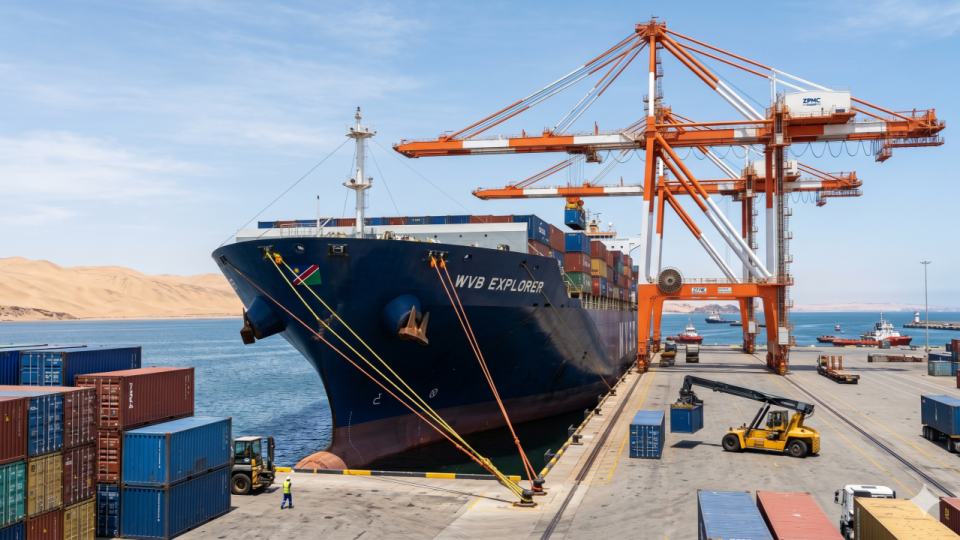
Walvis Bay Port Authority’s ongoing terminal upgrades and berth extensions have begun a gradual shift in how maritime cargo flows through Southern Africa. The port’s expanded capacity supports larger vessel calls, increased break-bulk handling, and faster turnaround times for container and general cargo operations. This modernisation directly impacts procurement for mooring systems, deck equipment, and rigging hardware across the entire SADC region.

According to Lloyd’s List Intelligence (2026), African port modernisation is attracting regional carriers seeking alternatives to congested hubs further south. Walvis Bay’s strategic position on the Atlantic coast, combined with its expansion agenda, is drawing transshipment volumes from Angola, Zambia, Botswana, and Namibia’s interior. For industrial procurement, this means higher demand for certified mooring ropes, synthetic slings, and specialist lifting gear across peak seasons.
Operational baseline: Walvis Bay handled 1.2 million TEU in 2025, with terminal expansion projects targeting 1.8 million TEU capacity by 2028. (Source: Walvis Bay Port Authority 2026)

Mooring and rigging standards in expanded berths
Expanded port capacity introduces new berth configurations and vessel classes. Larger Neo-Panamax and Post-Panamax containerships, as well as break-bulk multipurpose vessels, demand higher-specification mooring systems. Walvis Bay’s infrastructure upgrades now accommodate 5,000+ TEU feeders and 15,000+ TEU mainline services, each requiring certified mooring rope, shackles, and pad eyes rated to OCIMF and SOLAS standards.
Marine Ropes, headquartered in Walvis Bay since 1998, has direct visibility into these infrastructure changes. The port’s expansion aligns with our strategic stock positioning and the diversification of our 7,957-product catalogue to support both traditional fishing and offshore vessel supply alongside modern container terminal operations. Our OCIMF-certified inventory and ERPNext synchronisation across 7,295 items ensure we can respond to urgent mooring and rigging requirements without delay.
Logistics corridors activate procurement demand
Increased port throughput accelerates onshore logistics movement. The Trans-Cunene corridor (Walvis Bay to interior Angola), the Trans-Kalahari (Walvis Bay towards Botswana), and regional feeder routes to Zambia and Zimbabwe all experience higher cargo volumes. This translates directly to demand for lashing gear, synthetic webbing, and securing equipment for inland containerisation and break-bulk transport.


Procurement signal: Cargo dwell times in Walvis Bay are forecast to reduce by 12 to 18 per cent through 2027, shortening supply windows for regional distribution contracts. (Source: World Cargo News 2026)
Why this matters for Southern Africa
Walvis Bay’s infrastructure modernisation signals a structural shift in SADC maritime trade patterns. Logistics operators, mining contractors, and industrial procurement teams across Angola, Namibia, Zambia, Botswana, and Mozambique must plan for faster port cycles, larger vessel calls, and higher throughput volatility. Regional suppliers who can stock certified mooring, rigging, and lashing equipment with same-day availability in Walvis Bay gain competitive advantage.
What this means for maritime operators
Plan your mooring and rigging stock for peak summer season (November to February 2026/27). Certified synthetic and wire ropes, OCIMF-compliant shackles, and backup inventory in Walvis Bay will reduce port-call delays and meet the new berth specifications for larger vessel classes. Contact a regional procurement partner in Walvis Bay who understands expanded capacity demands.

