

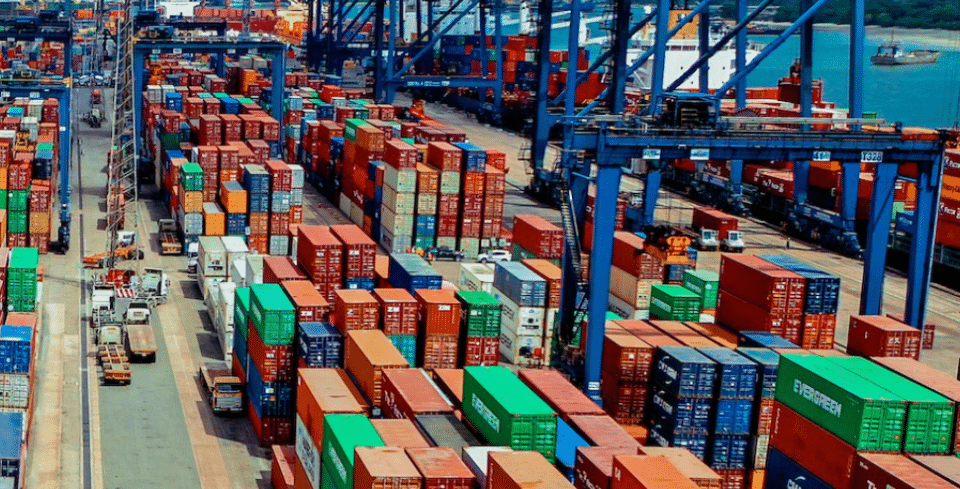


An inland port upgrade on the lakeshore of Lake Nyasa will make it easier to trade and integrate the region in the Southern African Development Community (SADC), making the southern part of Tanzania a prime logistics hub to the landlocked members in the SADC.
The 81bn/- modernisation of the Mbamba Bay Port that was initiated by the Tanzania Ports Authority (TPA) is currently nearing completion with works reported at 47.1 per cent completion and is expected to be completed by the third quarter of the year. Upon its completion, the upgraded facility will have two enlarged berths with the capacity of serving vessels of up to 5,000 tonnes in each, a modern cargo yard, container store that will hold about 3,000 containers, passenger amenities, health facilities, as well as a one-stop customs and logistics center.
Mbamba Bay is a natural commercial crossroads of Tanzania, Malawi and Mozambique that is strategically located in Nyasa District, Ruvuma Region. Its development into a contemporary inland port is likely to enhance the movement of cargo across the lake Nyasa greatly and the linkage of the producers in Southern Highlands to global and regional markets respectively.

To the SADC member states, especially to the landlocked nations like Malawi and Zambia the port is a good alternative trade route. The Malawi government is expected to enjoy a better lake transport connecting its northern regions with the growing road and rail network in Tanzania. The eastern provinces of Zambia can also use the route to export minerals and agricultural produce as the connection increases.
The port upgrade is part of the wider south development framework that is based on Mtwara Development Corridor. At the core of this vision is a proposed 1000 km Standard Gauge Railway (SGR) between the Indian Ocean port of Mtwara and the Mbamba Bay with branches being planned to the Mchuchuma-Liganga mining complex of the Njombe Region. The region is endowed with large reserves of coal and iron ore, and proper transport infrastructure is important in industrialisation in the region.

Within the proposed multimodal, cargo offloaded at Mtwara would be shipped inland to Mbamba Bay, and loaded on lake boats to Malawi and possibly Mozambique. Likewise, products of the neighbouring SADC countries could pass over the lake and reach the SGR to be exported via the Indian Ocean. This kind of smooth integration is bound to reduce transport expenses, turnaround times and increase competitiveness among exporters in the region.
Although the Port of Dar es Salaem continues to be the key maritime entry point into Tanzania, inland locations such as Mbamba Bay are used to diversify the logistics routes and redistribute the capacity across the nation. Such diversification enhances resilience in the Southern Transport Corridor and decreases the dependence on the conventional trade routes.
Other than trade facilitation, the project is estimated to lead to socio-economic development in southern Tanzania and neighbouring SADC. Logistics and warehousing and port business will increase in number of employment opportunities, and an international market at Mbamba Bay has complementary plans that are set to promote international commerce with Malawi and Mozambique.


With SADC one of the top priorities of regional integration and connectivity of infrastructures, Mbamba Bay Port is a viable move toward further economic integration. With its modernisation, the port is set to be a key in enriching trade governance, creating new opportunities to the producers and exporters in the southern part of Africa through the creation of a more efficient supply chain.

