

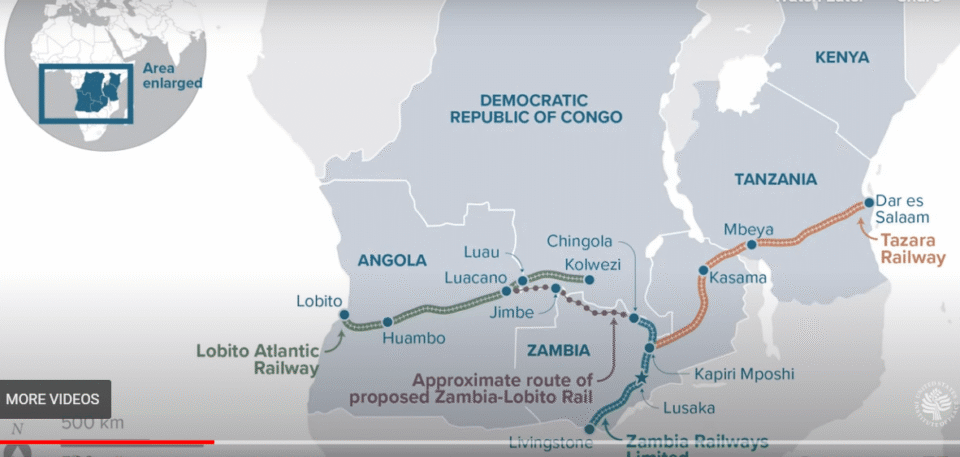


Zambia’s economy, being landlocked, heavily depends on a network of vital regional and domestic transport corridors that facilitate its connection to global markets as well as neighboring countries. These transport routes are crucial to trade, ensuring the efficient movement of goods and services and helping reduce logistics costs. By improving access to international markets, these corridors not only stimulate economic activity but also promote industrial growth within the country. This interconnected infrastructure is essential for improving trade competitiveness and supporting Zambia’s aspirations for sustainable economic development.
- North-South Corridor:
This corridor serves as the backbone of the regional transport network, effectively linking the port city of Durban in South Africa through Zimbabwe and Botswana into Zambia and extending to the Democratic Republic of the Congo (DRC). It is a vital route for freight transport, accounting for a substantial percentage of regional trade. The efficiency of this corridor is crucial for moving goods between these key nations, thereby supporting regional economies.

- Lobito Corridor:
The Lobito Corridor is a strategically important western trade and rail route that connects Zambia’s Copperbelt and North-Western provinces to the Atlantic port of Lobito in Angola. This corridor is significant for exporting Zambia’s copper and other minerals to international markets, offering a direct route to global shipping routes via Angola.

- Dar es Salaam Corridor:
This corridor links Zambia’s Copperbelt region and the DRC to the Port of Dar es Salaam in Tanzania. It is vital for the import and export of goods, including agricultural products and minerals. The accessibility of this corridor promotes trade with East African nations, enhancing Zambia’s trade diversification opportunities.
- Beira Development Corridor:
The Beira Corridor connects various regions of Zambia, Zimbabwe, and Malawi to the Port of Beira in Mozambique, situated along the Indian Ocean. This corridor is crucial for regional agricultural exports and facilitates trade in manufactured goods, providing an important maritime outlet for landlocked countries.


- Nacala Corridor:
This corridor establishes a direct connection between Zambia and Malawi, leading to the deep-water Port of Nacala in Mozambique. It is instrumental for the transport of bulk goods, including coal and agricultural products, and is vital for enhancing the trading capacities of both countries.
- Walvis Bay-Ndola-Lubumbashi Development Corridor (WBNLDC):
This corridor runs from the Namibian port of Walvis Bay through Botswana and Zimbabwe, reaching Zambia and the DRC. It is an essential trade route that strengthens links to the Atlantic Ocean, promotes economic development in the Copperbelt, and increases trade flows to international markets.
Key National Arteries (Inter-Territorial Roads)

Zambia possesses several key national arteries that facilitate domestic transport and connectivity between its regions:
– T2 Road (Great North Road):
This major road spans about 1,155 km from the Tanzanian border at Nakonde, passing through major towns such as Mpika, Kabwe, and Lusaka, and extending to the Zimbabwean border at Chirundu. It plays a crucial role in linking northern and southern Zambia, enhancing the movement of goods and people.
– Connecting Kapiri Mposhi:
The T2 Road also connects the town of Kapiri Mposhi through important mining hubs like Ndola, Kitwe, and Chingola, facilitating access to the DRC border. It is indispensable for the transport of minerals and manufactured products.
– Lusaka to Malawi Border Route:
Another vital route runs approximately 595 km eastward from Lusaka through Petauke and Chipata to the border with Malawi. This road is key for trade with Malawi and enhances regional connectivity.
– Livingstone to Turnpike Route:
This road runs about 430 km from the border with Zimbabwe at Livingstone through Choma to the Turnpike. It serves as a key transport link for tourism and trade in Zambia’s Southern region.
Zambia’s transport corridors and national roads drive economic growth, expand trade opportunities, and promote regional integration. Their continued development is vital for the country’s economic prospects and connectivity in Southern Africa.

