

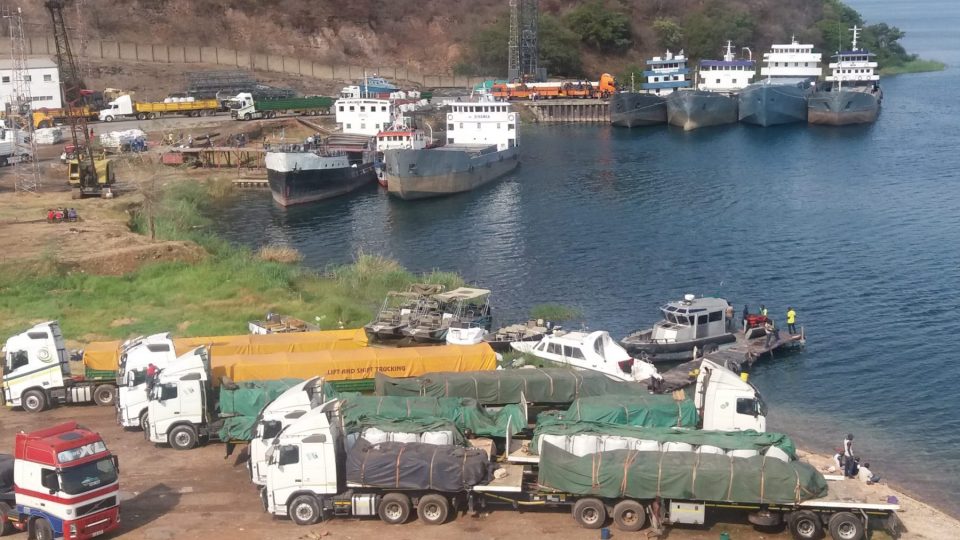


The Zambian government is continuing on the path of modernisation of the strategic Mpulungu Port on Lake Tanganyika to enhance regional logistics, boost intra-African trade and develop cross-border transport linkages.
The upgrade programme is planned to make Mpulungu Port a more competitive regional logistics hub in facilitating trade between Zambia, Burundi, the Democratic Republic of the Congo (DRC) and Tanzania. The port is Zambia’s only point of contact to Lake Tanganyika and plays a very important role in the logistics of goods transportation along the Great Lakes region.
During the Regional Validation Workshop on the Draft Final Report of the Feasibility Study for Harmonization of Transport Legislation, Procedures and Operations on Lake Tanganyika, Eng. Transport and Logistics Permanent Secretary Eng. Zambia is determined to upgrade Mpulungu Port to regional standards, said Fredrick Mwalusaka.

Lake Tanganyika is still a crucial transport corridor for Zambia and serves as a key enabler for regional trade and economic integration, he said.
According to Eng. Tanzania’s Mpulungu Port has seen robust export volumes in Mwalusaka, Zambia, because of increased demand for goods and services in the region. He pointed out that the upgrade will enhance efficiency, boost logistics performance and open new prospects for trade within the framework of the African Continental Free Trade Area (AfCFTA).

In addition to the port augmentation, the proposed greenfield railway line from Mpulungu Port to the main Tanzania Zambia Railway Authority (TAZARA) line was also discussed. The proposed railway line is likely to be a key component of a multimodal transport network, connecting the railway with the lake transportation system. The planned railway line will be a crucial part of the multimodal transport corridor, which is set to seamlessly integrate these modes.
The railway, if it is to be implemented, would result in a considerable enhancement of cargo flow to and from Lake Tanganyika, reduce transport costs, and make the regional supply chains more competitive. It would also improve access to regional markets as well as promote the integration of a more effective logistics chain throughout Central and East Africa.
Burundi Maritime and Port Authority (Bupa) Director General Godelieve Nininahazwe welcomed Zambia’s plans, calling the proposed railway a transformative regional infrastructure project.


She said that during the recent visit of the Burundi President, Évariste Ndayishimiye, to Zambia, the two countries signed a Memorandum of Understanding for the construction of the railway link between the TAZARA line and Mpulungu Port as well as greater cooperation in the maritime sector.
Nininahazwe called on partners in the region to take concrete steps beyond agreements to speed project implementation, which will tap into the economic potential of the Lake Tanganyika corridor.
The workshop assembled representatives from transport and logistics ministries of Burundi, Democratic Republic of the Congo, Tanzania and Zambia to discuss and validate recommendations for the harmonization of transport and port procedures and standards along Lake Tanganyika.
The proposed rail and the planned modernisation of Mpulungu Port are key components of an integrated regional transport corridor. The projects can help enhance multimodal logistics, optimise supply chains and consolidate Zambia’s position as a key link in the supply chain for trade within the Lake Tanganyika basin, provided they are implemented in collaboration.

