

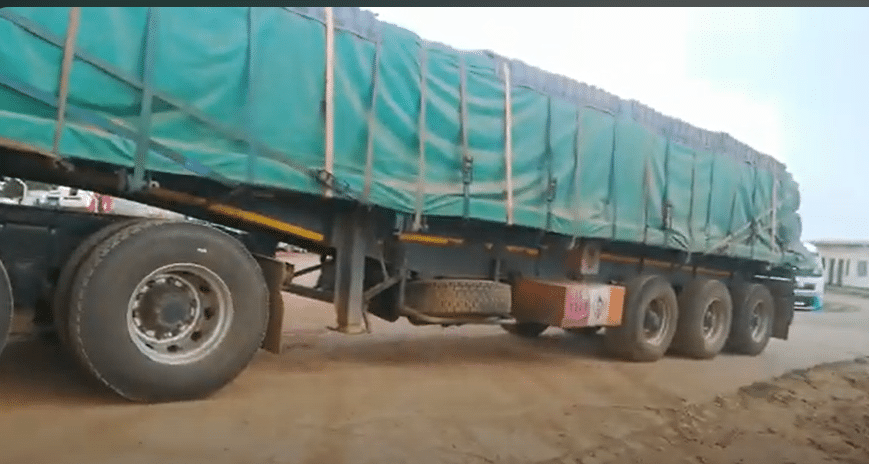


The Chanida–Cassacatiza One-Stop Border Post (OSBP) represents a significant development in cross-border trade facilitation between Zambia and Mozambique. This initiative is complemented by the implementation of a digital interconnection system designed to streamline customs and border management processes. By enabling integrated operations at a single location, the OSBP aims to reduce transit times and enhance the efficiency of bilateral trade activities, ultimately fostering closer economic ties between the two nations.
Zambia’s Minister of Technology and Science, Felix Mutati, and Mozambique’s Minister of Communications and Digital Transformation, Américo Muchanga, inaugurated the Chanida–Cassacatiza border post. Their involvement highlights that this project includes not only building infrastructure but also improving customs and border management systems with digital tools.
The Chanida–Cassacatiza border post links Zambia, a landlocked country that depends on regional routes for trade, to Mozambique’s ports of Beira and Nacala. These ports are key for Zambia’s imports and exports, particularly mining products, agricultural goods, and manufactured items. Zambian policy documents, such as Vision 2030, stress the importance of improving logistics and ensuring reliable access to international markets to help Zambia become a regional trade and logistics hub.

The One-Stop Border Post model combines customs, immigration, and other border controls from both countries into one location. This means that goods and travelers will be processed in one place rather than separately on either side of the border. This approach follows SADC regulations, which encourage member countries to streamline border procedures to reduce delays and lower business costs. Similar efforts in other regions have shown that coordinated border management can reduce clearance times and provide more predictability for freight operators.
Ilitongo Maboshe, Principal Public Relations Officer at Zambia’s Ministry of Technology and Science, noted that the new facility will work alongside ongoing investments in access roads that connect Chanida to the T4 and T6 highways, as well as improvements in border facilities and digital systems. These investments are vital because planning documents show that better border efficiency depends not only on administrative reforms but also on good road networks and information systems.

The border’s digital connection will allow real-time data sharing between authorities in Zambia and Mozambique. This is part of a broader effort by both governments to improve customs systems and increase transparency, reduce repeated processes, and improve revenue collection at the border. Regional trade facilitation reports highlight that sharing electronic data is crucial for modern border operations and helps prevent fraud and delays.
Both governments expect the Chanida–Cassacatiza OSBP to lower trade and transport costs, improve revenue collection, increase foreign exchange earnings through better export routes, and support local economic development. This project could stimulate growth in transportation, logistics, and agriculture for Zambia’s Eastern Province and nearby areas in Mozambique by making cross-border transactions smoother and more efficient. Zambia’s Vision 2030 emphasizes that modernizing infrastructure and regional connectivity are key to economic growth and will encourage investor confidence in the reform and integration agenda.
For Mozambique, using the Beira and Nacala corridors efficiently aligns with official goals to maximize the economic advantages of port infrastructure and regional trade. The Chanida–Cassacatiza initiative strengthens the trade link between inland areas and the Indian Ocean, showing how cooperation between the two countries, supported by regional commitments, can reshape trade and contribute to Southern Africa’s growth strategy.



