



Image: WBCG
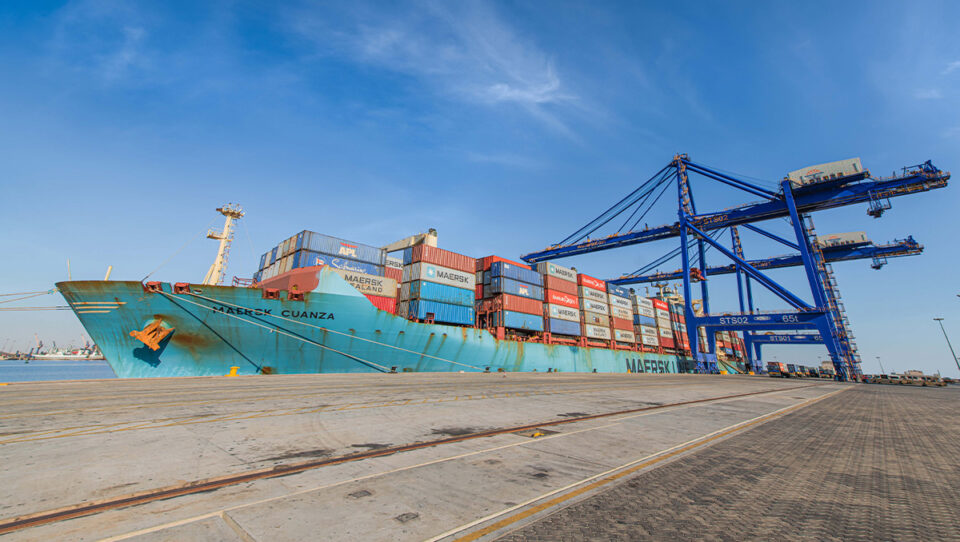
In July 2026, the port of Walvis Bay consolidated its status as Namibia’s foremost hub for international trade, processing an impressive N$3.9 billion in exports. This figure makes Walvis Bay the most significant entry point for both exports and imports among the nation’s various border posts and trade offices.

Recent data from the Namibia Statistics Agency show that Walvis Bay outperformed all other ports and border facilities in trade volume. Following Walvis Bay, Eros Airport was the second-largest export point, facilitating exports worth N$2.3 billion. The Katima Mulilo border post came third, contributing N$1.7 billion in exports.

On the import front, Walvis Bay again led the country, handling a substantial N$6.3 billion in imports. The Ariamsvlei border post ranked as the second-largest entry point, managing imports valued at N$3.5 billion, with the Trans-Kalahari border post following closely behind at N$2.3 billion.
A noteworthy trend was observed at the Ngoma border post, where imports rose significantly in July 2026. Total imports surged to N$293 million, up from N$146 million in June. Conversely, exports from Ngoma fell slightly, dropping to N$139 million in July from N$164 million the previous month.


Petroleum oils dominated Ngoma’s export sector, accounting for N$118.8 million, or 85.6% of total exports through the border post. Fish was the second-largest export, valued at N$5.2 million, followed by wheat and unmilled meslin at N$5 million.
In terms of imports, other crude minerals led at Ngoma, representing N$221.3 million, or 75.4% of total imports through this location. Medicinal and pharmaceutical products also contributed significantly, at N$25.4 million, while alcoholic beverages accounted for N$17.5 million.
Namibia’s trade interactions with other African countries also played a vital role in the nation’s overall trade dynamics during July. The total value of intra-African exports reached N$6.2 billion, while imports from African nations amounted to N$7.3 billion, resulting in a trade deficit of N$1.2 billion for this period. Overall, Namibia’s total trade with the rest of the continent reached an impressive N$13.5 billion.

Exports to African markets comprised 58% of Namibia’s total exports, underscoring the critical role regional markets play in the country’s external trade landscape. Major export destinations within Africa for Namibia during this month included South Africa, Zambia, Botswana, the Democratic Republic of Congo, and Mozambique. On the import side, key sources of goods were South Africa, Zambia, the Democratic Republic of Congo, Zimbabwe, and Nigeria, further emphasising the regional interconnectedness of Namibia’s trade relationships.

